FIELD NOTES / SHAHARIER SHOUROV
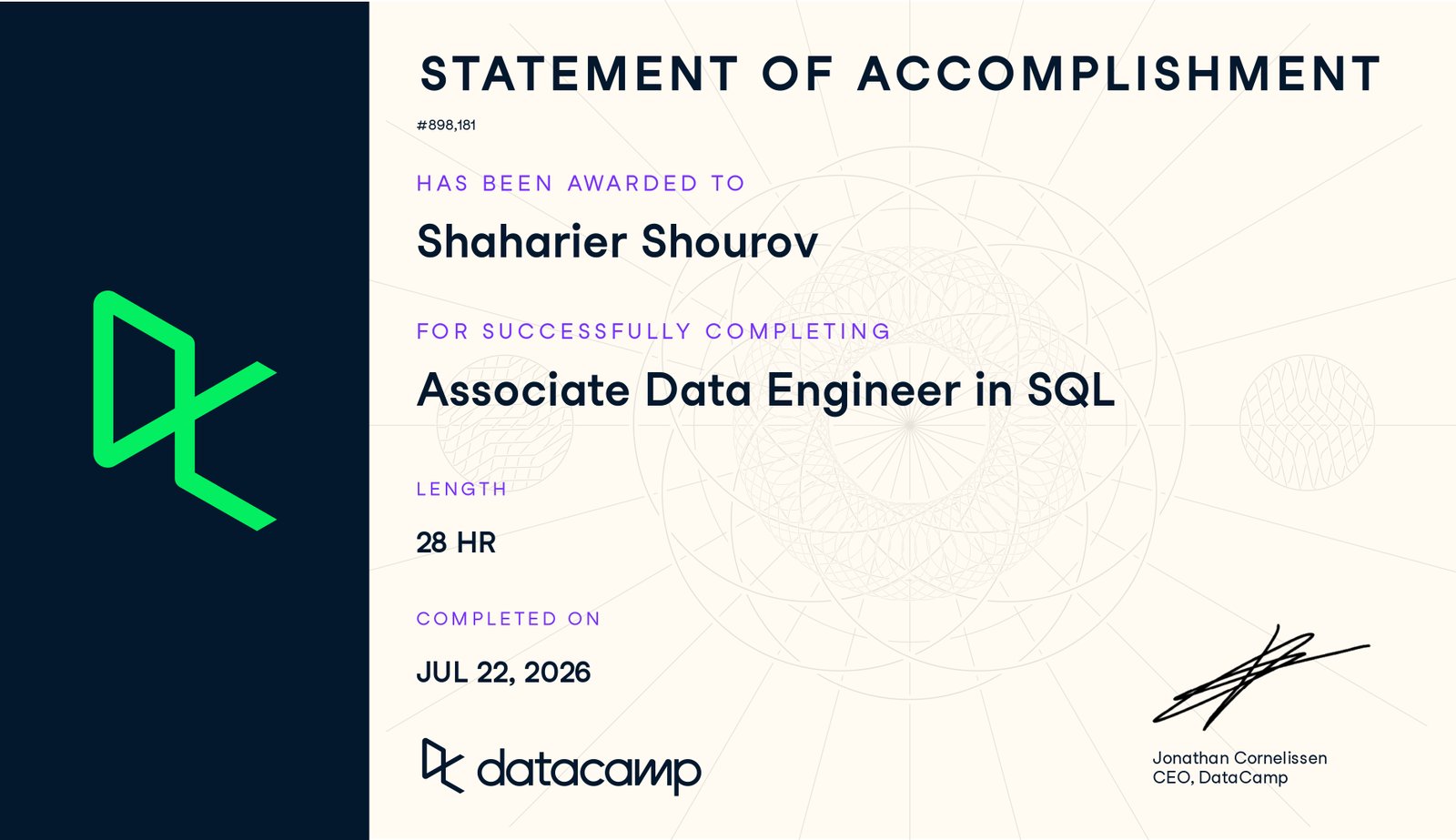
Completed Associate Data Engineer in SQL
Developing my foundation in SQL, database design and data warehousing.
Published · Updated
A more structured understanding of SQL
Completing the Associate Data Engineer in SQL learning path gave me a structured way to develop the database side of my skills. I came to it from textile engineering and merchandising, so it was useful to study how data is organised as well as how to query it.
What I worked through
- Joins and set operations. Combining related data while paying attention to keys and the number of rows each join produces.
- Database design. Understanding primary keys, foreign keys and the reasons for separating related entities.
- Data warehousing. Thinking about facts, dimensions and the difference between operational records and analytical models.
- Snowflake concepts. Extending my understanding beyond a local relational database.
Applying it to portfolio work
My Olist project uses SQL analysis alongside Power Query and Power BI. My ETL project takes a different direction, using PostgreSQL for cleaning, deduplication and audit logging, with pgAgent scheduling the workflow.
These projects make the learning concrete. A query can return a plausible answer even when a join has duplicated records. A transformation can work on one file but fail on a different date format. I want my project notes to show how I think about those problems, not just the final output.
The next part of the toolkit
I am continuing with the Data Engineer in Python track. My aim is to build on SQL with tools for working with APIs, files and workflows that involve several systems.
Related field notes
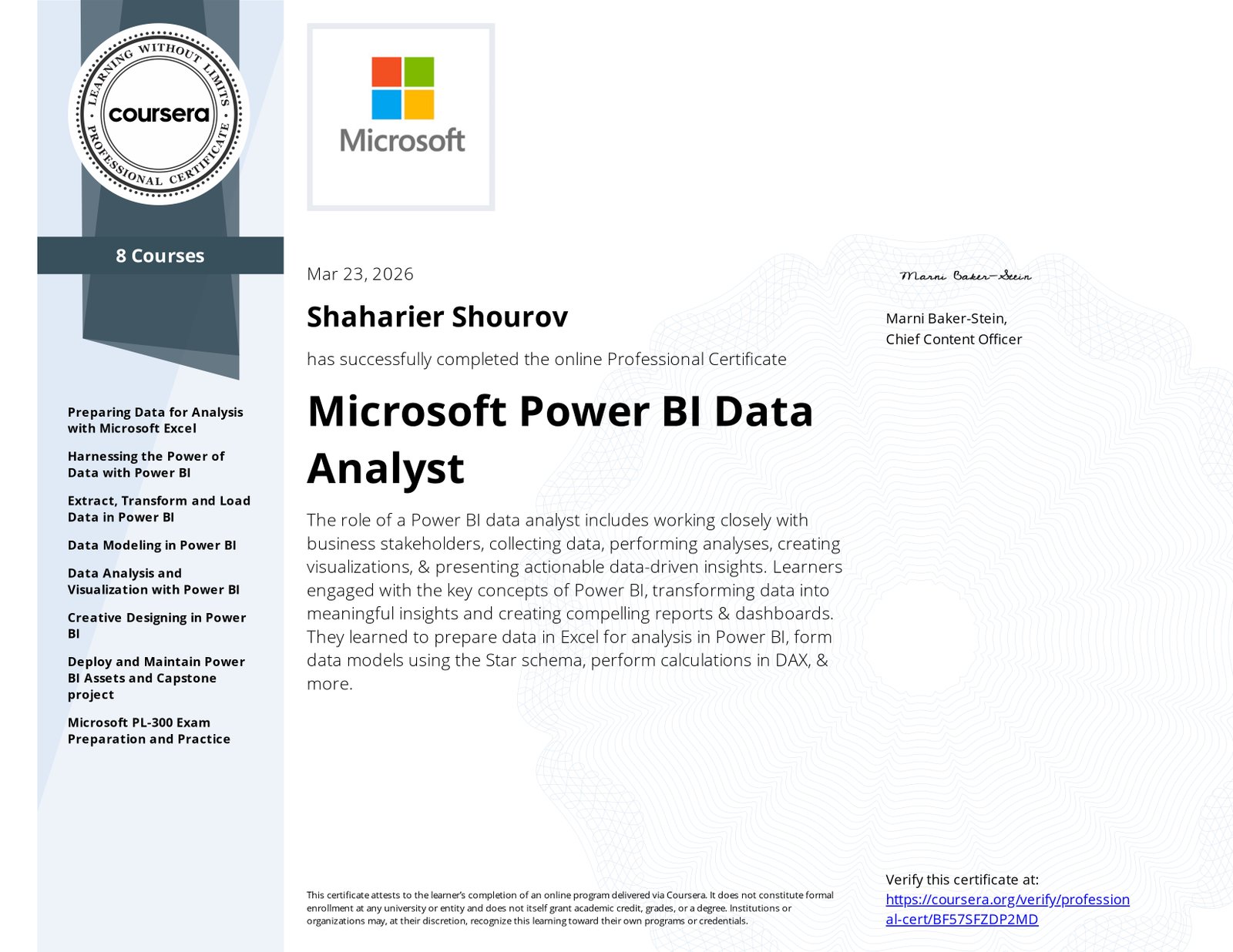
Earned the Microsoft Power BI Data Analyst Professional Certificate
Completing Microsoft's eight course Power BI Professional Certificate on Coursera.
Read article ↗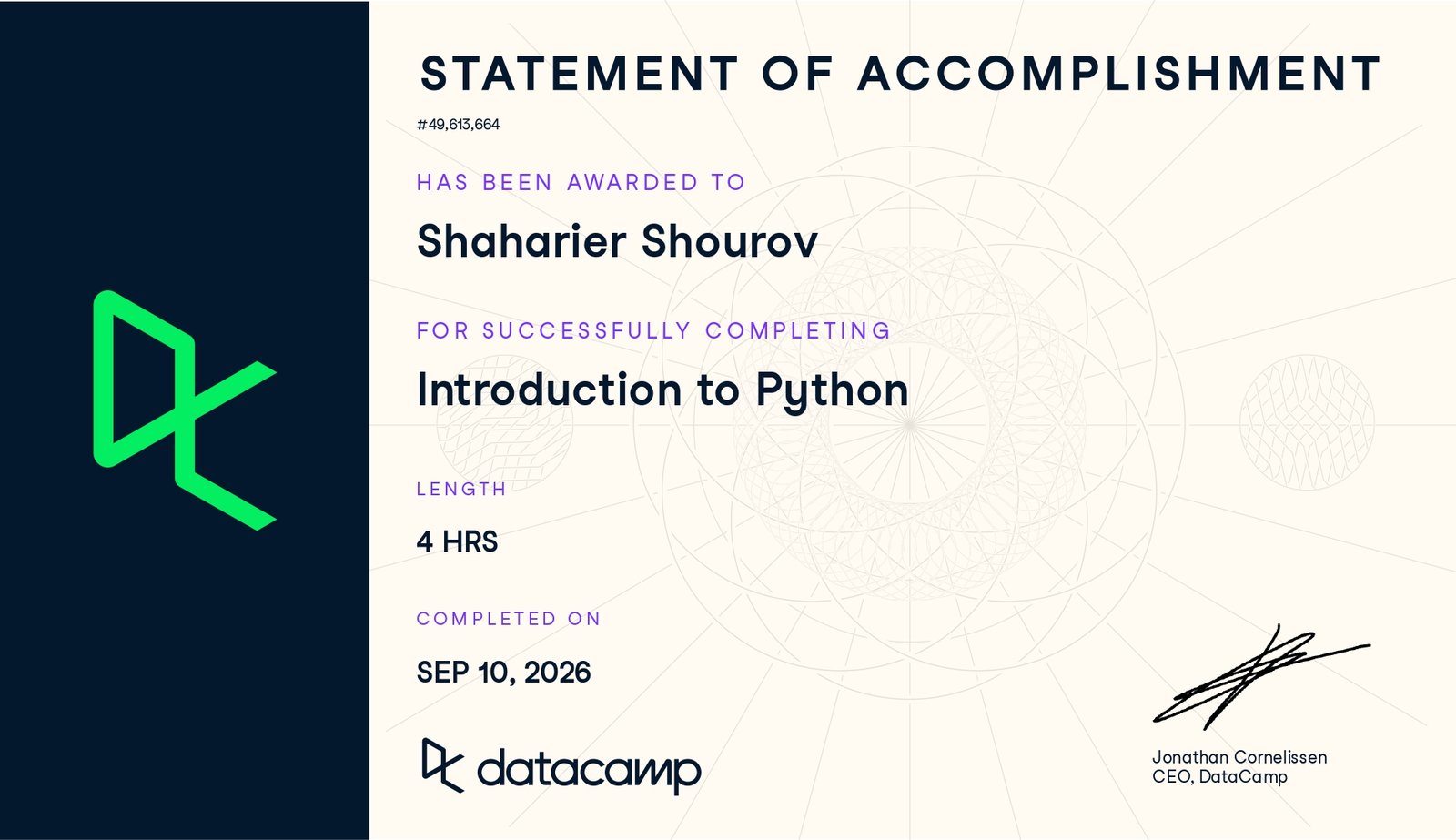
Back to Learning: Starting Data Engineer in Python
Building on SQL while learning data engineering with Python.
Read article ↗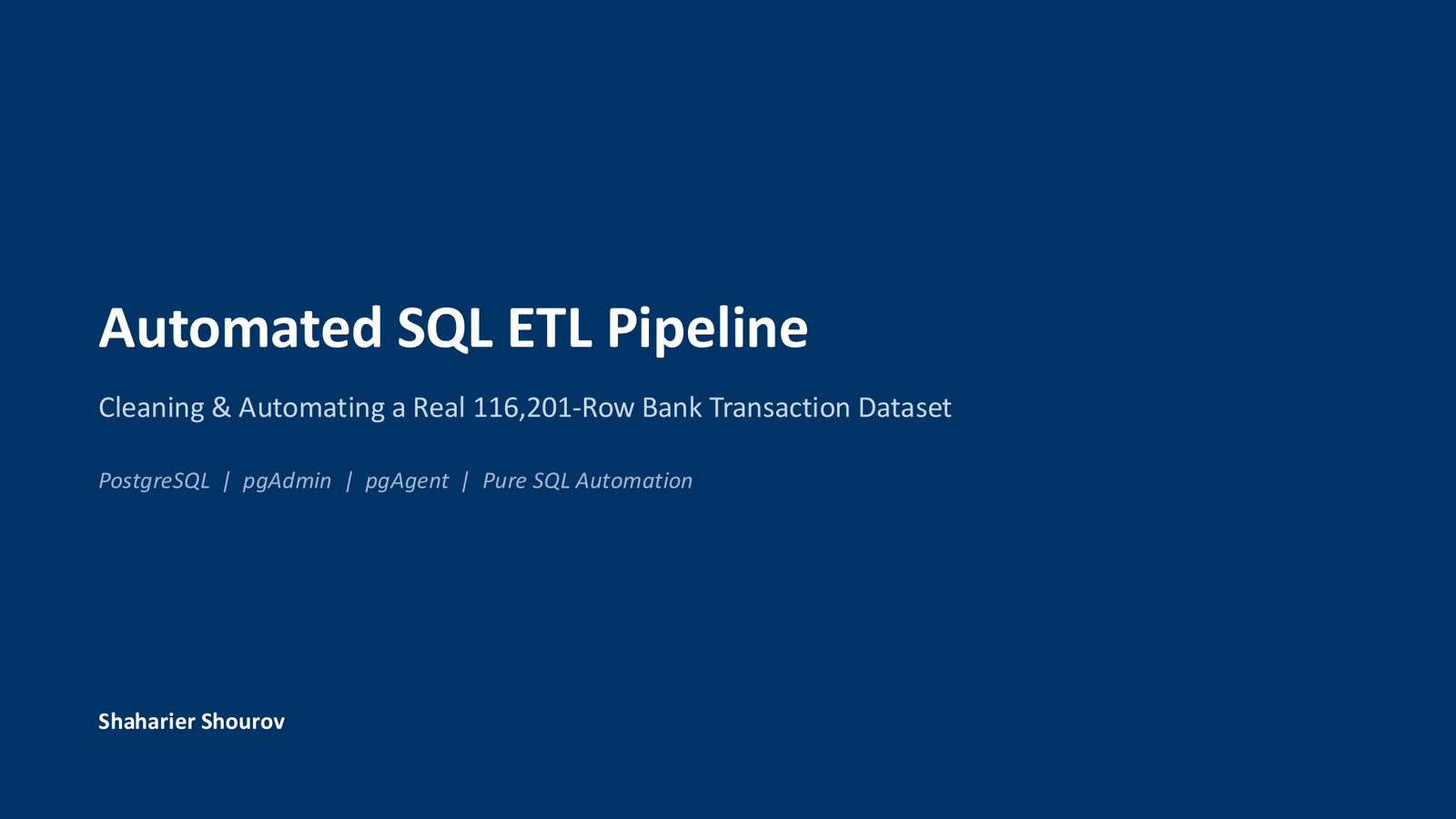
Building an Automated SQL ETL Pipeline
Preparing bank transaction data with PostgreSQL and scheduling a workflow with pgAgent.
Read article ↗